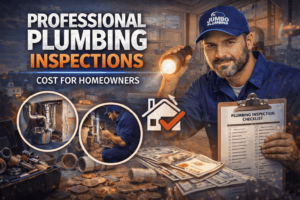
Professional Plumbing Inspections: What They Include, How Much They Cost, and When Homeowners Should Book One
A professional plumbing inspection is a comprehensive evaluation of your home’s entire water supply, drainage, and fixture systems—typically costing between $150 and $500—that can prevent thousands of dollars in water damage, failed home sales, and emergency repairs when scheduled annually or before major real estate transactions.
Key Takeaways
- What’s included: A certified plumbing inspection covers water supply lines, drainage systems, water heaters, fixtures, shut-off valves, and often includes sewer camera inspection for hidden issues
- Cost expectations: Homeowners should budget $150–$500 for a standard residential plumbing inspection, with sewer camera inspections adding $100–$300
- Timing matters: Schedule inspections annually for preventive maintenance, before buying or selling a home, after purchasing older properties, or when noticing warning signs like slow drains or water pressure changes
- Who performs them: Licensed plumbers with specialized diagnostic equipment provide more thorough plumbing-specific inspections than general home inspectors
- Code compliance: Professional inspections identify code violations that could affect insurance coverage, resale value, and safety
Industry Statistics
| Statistic |
| The average household wastes more than 10,000 gallons of water each year due to hidden leaks—a reminder that even small, unnoticed drips can lead to major water loss and higher bills |
| Homes with pre-listing inspection reports—including plumbing evaluations—tend to sell faster and with fewer surprises because buyers feel more confident about the property’s true condition |
| A full sewer-line replacement can cost from $3,000 to more than $25,000, making it one of the most expensive plumbing failures a homeowner can face |
| A sewer-camera inspection typically costs between $150 and $300, offering an affordable way to detect root intrusion, corrosion, and blockages long before they turn into costly emergencies |
What Is Included in a Professional Plumbing Inspection?
Professional plumbing inspections provide comprehensive evaluation of your home’s water and waste systems. Licensed plumbers examine every accessible component and document current conditions.
Water supply line evaluation begins at the main water entry point. Inspectors check the main shut-off valve, examine water meter connections, and trace supply lines throughout your home. They look for corrosion, improper materials, inadequate support, and connections that don’t meet current code standards.
Drainage and waste system assessment examines how wastewater exits your home. Inspectors verify proper drain slopes, check vent stack connections that prevent sewer gas entry, and examine waste line materials for deterioration.
Water heater inspection covers safety and operational components: temperature and pressure relief valves, venting systems, gas or electrical connections, and tank condition for rust or leaks. Inspectors verify installations meet current code requirements.
Fixture and faucet examination includes testing every toilet, sink, shower, and bathtub. Inspectors check for leaks at connections, verify proper drainage, test shut-off valves, and examine fixture mounting security.
Water pressure testing measures system performance using pressure gauges at multiple locations. Low pressure might indicate restricted pipes or supply line problems. Excessive pressure can damage fixtures and appliances.
Ready to protect your home? Book a certified plumbing inspection with Jumbo Plumbing.
How Much Does a Plumbing Inspection Cost?
Plumbing inspection costs vary based on several factors that homeowners should consider when budgeting for this essential service. The investment in thorough inspection typically pays for itself by preventing expensive repairs and providing negotiation leverage during real estate transactions.
Standard Residential Plumbing Inspection Pricing
Standard residential plumbing inspections range $150–$250 for basic visual assessments covering above-ground pipes, fixtures, and water heaters. This service suits homeowners seeking routine annual maintenance checks or those who’ve noticed minor concerns warranting professional evaluation.
Comprehensive plumbing system inspections cost $250–$500 and include everything in basic inspections plus pressure testing, detailed documentation, and thorough examination of all accessible system components. These inspections generate formal reports suitable for real estate transactions, insurance documentation, or major renovation planning.
Several factors influence inspection pricing. Home size directly affects inspection time—a 1,200-square-foot bungalow requires less evaluation than a 3,500-square-foot two-storey home with multiple bathrooms. Home age impacts inspection complexity because older properties often contain mixed pipe materials and previous repairs that need evaluation. Systems approaching end-of-life require detailed assessment.
Accessibility affects labour requirements. Homes with finished basements or limited crawl space access require more time for thorough inspection. Easy access to plumbing systems keeps costs toward the lower pricing range.
Regional pricing variations exist across Canada. Major urban centres typically charge higher rates reflecting increased cost of living and business operation expenses. Rural areas might see lower base rates but could include travel charges if plumbers must drive substantial distances.
Are Sewer Camera Inspections Worth the Extra Cost?
Sewer camera inspections add $100–$300 to standard plumbing inspection costs but provide invaluable information about underground waste lines that visual inspection cannot reveal. These specialized inspections use waterproof cameras mounted on flexible cables that travel through drain lines, transmitting real-time video to monitors where plumbers identify problems.
Camera inspections reveal critical problems:
- Root intrusion before tree roots completely block sewer lines
- Cracked or collapsed pipes that will require replacement
- Buildup of grease or debris causing gradual flow restriction
- Improper pipe slopes that prevent proper drainage
- Connections that don’t meet code standards
This information allows homeowners to address problems proactively rather than waiting for sewage backups.
When to add sewer camera service depends on specific circumstances. Older homes built before 1980 often have clay tile or cast iron sewer lines susceptible to root intrusion and deterioration. Properties with large trees near sewer line paths face higher root intrusion risk. Homes experiencing frequent drain backups or slow drainage despite clearing individual fixtures warrant camera inspection to identify main line problems.
Inspection Types & Costs:
| Inspection Type | Average Cost | What’s Included | Best For |
| Basic Visual Inspection | $150–$250 | Above-ground pipes, fixtures, water heater | Annual maintenance |
| Comprehensive Plumbing Inspection | $250–$500 | Full system + pressure testing + documentation | Pre-purchase/pre-sale |
| Sewer Camera Inspection | $100–$300 (add-on) | Video inspection of main sewer line | Older homes, tree-lined properties |
| Full Plumbing + Sewer Package | $350–$700 | Complete system + camera + detailed report | Maximum peace of mind |
Cost-benefit analysis strongly favours preventive camera inspection. Sewer line replacement costs $3,000–$25,000 depending on length, depth, and access requirements. Camera inspection costing under $300 identifies problems early when less invasive repairs might suffice. For home buyers, camera inspection provides negotiation leverage or opportunity to walk away from properties with severe sewer line problems.
Get a quote from licensed plumbing inspectors in your area through our contact page.
Do You Need a Plumbing Inspection Before Buying a House?
Yes, pre-purchase plumbing inspections protect home buyers from inheriting expensive problems that sellers may not disclose or even know about. General home inspections include cursory plumbing checks, but dedicated plumbing system inspections by licensed plumbers provide depth that general inspectors cannot match.
Pre-purchase inspections reveal problems that affect your buying decision:
- Outdated materials: Polybutylene or galvanized steel pipes indicate imminent replacement costs
- Previous damage: Evidence of leaks suggests ongoing problems covered by cosmetic repairs
- Pressure issues: Inadequate water pressure signals supply line restrictions or undersized pipes
The inspection report provides concrete documentation for price negotiations. When inspections reveal $5,000 in necessary plumbing repairs, buyers can request price reductions, ask sellers to complete repairs before closing, or negotiate repair credits. Without professional inspection, buyers discover problems after purchase when they bear full responsibility for repairs.
Approximately 14% of home sales fall through due to inspection issues, with plumbing among the top concerns alongside structural and electrical problems. Serious plumbing defects like failing sewer lines, outdated supply systems requiring complete replacement, or unpermitted modifications that don’t meet code give buyers justified reasons to walk away from purchases.
What Are the Biggest Red Flags in a Home Plumbing Inspection?
Polybutylene pipes installed primarily between 1978 and 1995 represent major red flags because this material fails prematurely. These grey or white plastic pipes deteriorate from chlorine in municipal water supplies, eventually bursting without warning. Homes with polybutylene plumbing face inevitable complete repiping costs ranging $4,000–$15,000.
Galvanized steel pipes common in homes built before 1960 corrode internally over time. The corrosion restricts water flow, causes pressure drops, and eventually leads to leaks. Replacing galvanized plumbing costs $2,000–$10,000 depending on home size and accessibility. Homes with original galvanized pipes over 50 years old need replacement soon.
Evidence of previous leaks or water damage suggests chronic problems. Water stains on ceilings beneath bathrooms, warped flooring near plumbing fixtures, or mould growth around pipes indicate leaks that sellers have patched without addressing root causes. These red flags warrant careful investigation to determine if underlying problems persist.
Improper venting creates health and functionality hazards. Drain systems require proper venting to prevent sewer gas entry and ensure drains flow correctly. Missing vents, incorrectly sized vent pipes, or vents terminating improperly through roofs indicate code violations requiring correction.
Code violations discovered during inspections must be corrected before homes can be sold in many jurisdictions. Unpermitted plumbing modifications, improper water heater installations, or missing backflow preventers all represent violations that affect property value and insurability.
Root intrusion in sewer lines constitutes a serious red flag requiring immediate attention. Camera inspections reveal tree roots penetrating pipe joints or cracks, gradually restricting flow until complete blockages occur. Minor root intrusion might clear through hydro-jetting costing $300–$800, but severe intrusion requires pipe replacement.
5 Red Flag Symptoms to Watch For:
- Discoloured water or rusty stains
- Persistent low water pressure
- Slow-draining fixtures throughout home
- Sewage odours near drains
- Visible corrosion on exposed pipes
Schedule a plumbing inspection before your home purchase at Jumbo Plumbing.
How Often Should Plumbing Be Inspected?
Annual inspections provide preventive maintenance that catches minor issues before they become expensive emergencies. This frequency suits most homes with modern plumbing systems.
Inspection frequency by home age:
- New homes (0-10 years): Every 2-3 years to verify proper installation
- Established homes (10-25 years): Annual inspections as components approach replacement timeframes
- Older homes (25+ years): Every 6-12 months as aging pipes and fixtures face increased failure risk
- Historic homes (40-50+ years): Biannual inspections for properties with original plumbing
Immediate inspection warranted when:
- Purchasing a home (before closing to identify problems)
- Planning major renovations (to assess system capacity)
- Noticing warning signs (pressure changes, recurring clogs, unusual sounds)
How Do I Know If I Need to Repipe My House?
Several warning signs indicate system-wide issues:
Frequent leaks at different locations suggest widespread pipe deterioration. Repairing individual leaks becomes futile when the entire system approaches failure.
Discoloured water from multiple fixtures indicates internal pipe corrosion. Rusty or brown water means advanced corrosion has reduced pipe diameter and contaminated water.
Persistent low water pressure despite adequate municipal pressure suggests internal pipe restrictions from corrosion, mineral buildup, or undersized original piping.
Pipe material lifespans:
- Polybutylene: 10-15 years
- Galvanized steel: 40-50 years
- Copper: 50+ years (can corrode prematurely)
- PEX: Expected 50+ years
Not sure when your home was last inspected? Contact Jumbo Plumbing today.
What Tools Do Plumbers Use During Inspections?
Professional plumbing inspections require specialized diagnostic equipment:
Sewer cameras mounted on flexible cables travel through drain lines capturing video of pipe interiors. High-resolution cameras with LED lighting reveal cracks, root intrusion, blockages, and deterioration.
Pressure gauges measure water pressure at multiple locations. Digital gauges show whether pressure falls within the optimal 40-60 PSI range.
Moisture meters detect water presence inside walls, under floors, and in hidden locations. These devices help locate slow leaks before visible damage appears.
Thermal imaging cameras detect temperature variations indicating hidden leaks, inadequate insulation, or hot spots suggesting water heater issues.
Acoustic leak detectors use sensitive microphones to hear water escaping from pressurized pipes, pinpointing leak locations without destructive investigation.
How Do Plumbers Detect Hidden Leaks?
Acoustic detection listens for water escaping under pressure. Plumbers use headphones connected to ground microphones that amplify leak sounds, moving along suspected pipe paths to pinpoint locations.
Thermal imaging reveals temperature differences indicating moisture. Wet materials appear cooler on thermal cameras because evaporating water draws heat.
Pressure testing isolates leak locations. Plumbers close all fixtures, pressurize the system, and monitor gauges. Pressure drops indicate leaks, and sequential valve closures isolate specific sections.
Moisture meters confirm water presence after other methods suggest leak locations.
What Do Inspectors Look for in Plumbing Systems?
Comprehensive inspections follow systematic checklists:
- Main shut-off valve: Location, operation, and condition
- Supply lines: Materials, diameters, support, leaks, or corrosion
- Drainage system: Vent stack termination, drain slopes, waste line materials
- Water heater: Temperature settings, relief valve operation, venting, seismic strapping
- Fixtures: Toilet leaks, faucet operation, shower drainage, under-sink connections
Documentation standards ensure homeowners receive comprehensive reports including date and inspector credentials, complete system assessment, photo documentation, prioritized repair recommendations, estimated costs, and code compliance status.
Plumber vs. Home Inspector:
| Factor | Licensed Plumber | General Home Inspector |
| Plumbing expertise | Specialized, in-depth | General overview |
| Diagnostic tools | Professional-grade (cameras, pressure testers) | Basic visual tools |
| Code knowledge | Current plumbing codes | General building codes |
| Repair capabilities | Can fix issues immediately | Report only |
| Cost | $200–$500 | Included in home inspection |
| Best for | Detailed plumbing concerns | Overall home purchase |
Choose licensed professionals for your plumbing inspection at Jumbo Plumbing.
Are Plumbing Inspections Required for Code Compliance?
Yes, plumbing inspections become mandatory to verify work meets building codes and safety standards.
When inspections are required:
- New construction and major installations
- Bathroom additions or significant repiping
- Water heater replacements
- System modifications requiring permits
Municipal authorities require inspections at various stages to protect public health and safety. Licensed plumbers coordinate with municipal inspectors who verify code compliance.
Insurance implications: Many insurance companies offer premium discounts for homes with documented recent inspections. Inspections provide evidence of proper maintenance if claims arise.
Real estate transactions: Some jurisdictions require plumbing inspections before sales can close. Even where not legally mandated, buyers increasingly demand professional inspections as purchase conditions.
Can I Get a Plumbing Inspection Report?
Yes, professional plumbing inspections include detailed written reports documenting findings, recommendations, and system conditions. These reports serve multiple purposes beyond immediate repair planning.
What Should Be Included in a Home Plumbing Inspection Report?
Essential documentation elements ensure inspection reports provide useful, actionable information. Complete system assessment summaries describe overall plumbing condition, identify major concerns requiring immediate attention, and note minor issues appropriate for routine maintenance scheduling.
Photo and video documentation supports written descriptions. Images show homeowners exactly what inspectors observed, helping non-technical readers understand problems. Videos from sewer camera inspections provide compelling evidence of drain line conditions.
Repair recommendations prioritize issues by urgency and cost. Reports typically categorize findings as immediate repairs (safety hazards or imminent failures), near-term repairs (problems likely to worsen within 1-2 years), and long-term maintenance (components approaching end-of-life but currently functional).
Estimated costs for necessary repairs help homeowners budget appropriately. While inspection itself doesn’t include repair quotes, ballpark cost ranges allow financial planning. Detailed repair quotes require separate estimates after homeowners decide which work to proceed with.
Code compliance status documents whether systems meet current standards. Pre-1980 homes often have plumbing that met codes when installed but doesn’t satisfy modern requirements. Reports note these discrepancies and explain implications for renovations or insurance coverage.
What Your Inspection Report Should Include:
- Date and inspector credentials
- Complete system assessment summary
- Photo/video documentation of concerns
- Prioritized repair recommendations
- Estimated costs for necessary repairs
- Code compliance status
Request a detailed inspection report from our certified team.
What Are the Four Biggest Plumbing Code Violations?
Code violations discovered during inspections require correction to ensure safety, maintain property value, and satisfy insurance requirements. Four violations appear most frequently in residential properties.
Improper venting causes sewer gas backup and drainage problems. Every plumbing fixture requires proper venting to allow air entry as water drains. Missing vents, undersized vent pipes, or vents terminating improperly create health hazards from sewer gas and functionality problems from poor drainage. Correcting vent violations typically costs $500–$2,000 depending on accessibility.
Incorrect pipe materials or connections create failure risks and code violations. Using non-approved materials, mixing incompatible pipe types without proper transitions, or employing incorrect fittings all constitute violations. Some older homes contain materials now prohibited under current codes. While grandfathered installations don’t require immediate replacement, any modifications must use approved materials.
Unpermitted work or modifications represent serious violations affecting property value and insurance coverage. Previous homeowners or unlicensed contractors sometimes complete plumbing work without required permits. This unpermitted work must be brought to code before homes can be sold, often requiring substantial corrections beyond the original work scope.
Inadequate water heater installation encompasses multiple potential violations. Improper venting allowing combustion gases to enter living spaces, missing temperature-pressure relief valves, inadequate clearances to combustible materials, and lack of seismic strapping in earthquake zones all represent common violations. Water heater installation corrections cost $200–$800 depending on specific deficiencies.
Why Do Plumbers Say Not to Use Drain Cleaner?
Licensed plumbers consistently advise against chemical drain cleaners despite their widespread availability.
Chemical drain cleaners damage pipes through extreme caustic reactions. These products generate heat attempting to dissolve blockages. The reactions can soften PVC pipes, corrode metal pipes, and damage rubber seals throughout drainage systems.
The chemicals often fail to clear blockages completely. Drain cleaners work best on hair and soap clogs near drain openings but prove ineffective against root intrusion, solid objects, or grease buildups farther down lines.
Environmental concerns stem from toxic chemical composition. These products contain sodium hydroxide or sulfuric acid that damage septic systems and harm aquatic life when entering waterways.
Professional alternatives solve drain problems effectively:
- Mechanical snaking: Physically removes blockages ($250–$700)
- Hydro-jetting: High-pressure water scours pipes clean ($1,300–$2,300)
- Camera inspection: Identifies blockage locations for targeted solutions ($100–$300)
Have drain issues? Get a professional inspection instead of chemical solutions.
Find Plumbing Inspection Services Near You with Competitive Rates
Selecting qualified plumbing inspection services requires evaluating several factors beyond simple price comparison.
What to look for:
- Valid licensing: Verify inspectors hold current provincial plumbing licenses
- Insurance coverage: Request proof of liability insurance and workers’ compensation
- Advanced equipment: Companies offering sewer cameras, thermal imaging, and acoustic leak detection provide more comprehensive evaluations
- Written reports: Ensure inspections include photo documentation, cost estimates, and prioritized recommendations
Questions to ask before booking:
- Do you hold a valid provincial plumbing license?
- What diagnostic equipment do you use?
- Will I receive a written report with photos?
- How long does the inspection typically take?
- Can you provide references from recent clients?
Local licensing requirements vary by province. Ontario requires Certificate of Qualification through the Ontario College of Trades. British Columbia mandates certification through SkilledTradesBC.
Consider our membership programmes which include annual plumbing inspections, priority emergency service, and repair discounts.
Get competitive rates on comprehensive plumbing inspections by contacting us.
A professional plumbing inspection represents one of the smartest investments homeowners can make. For $150–$500, certified inspectors identify hidden leaks, code violations, and aging infrastructure before these issues become expensive emergencies.
Key benefits of regular plumbing inspections:
- Catch minor problems during routine maintenance
- Avoid middle-of-the-night emergency repairs
- Document system conditions for insurance and resale
- Identify code violations affecting coverage and safety
- Plan financially for necessary replacements
Pre-purchase inspections protect buyers from inheriting problems costing thousands to repair. Sellers benefit from pre-listing inspections that identify issues before buyers discover them. Current homeowners gain peace of mind through annual evaluations that prevent water damage and system failures.
Licensed plumbers provide more thorough evaluations than general home inspectors. Specialized diagnostic equipment, in-depth code knowledge, and immediate repair capabilities make plumbers ideal for detailed system assessment.
Protect your home today—book your professional plumbing inspection with Jumbo Plumbing.
Frequently Asked Questions
What is included in a plumbing inspection?
A plumbing inspection covers water supply lines, drainage systems, water heaters, fixtures, shut-off valves, and water pressure testing.
How much does a plumbing inspection cost?
Standard plumbing inspections cost $150–$500, with sewer camera inspections adding $100–$300.
Do I need a plumbing inspection before buying a house?
Yes, a pre-purchase plumbing inspection can reveal hidden issues that may cost thousands to repair.
How often should plumbing be inspected?
Homeowners should schedule plumbing inspections annually, or more frequently for homes over 25 years old.
Are sewer camera inspections worth it?
Yes, camera inspections detect root intrusion, cracks, and blockages that visual inspections cannot identify.
What tools do plumbers use during inspections?
Plumbers use pressure gauges, sewer cameras, moisture meters, thermal imaging, and acoustic leak detectors.
Can I say no to a plumbing inspection?
You can decline, but skipping inspections risks missing costly hidden damage and may affect home sale negotiations.
What is the 135 rule in plumbing?
The 135 rule refers to maximum water heater temperature settings (135°F/57°C) to prevent scalding whilst controlling bacteria.
Who performs plumbing inspections—plumber or home inspector?
Licensed plumbers provide more thorough plumbing-specific inspections than general home inspectors.
Are plumbing inspections required for code compliance?
Inspections are required after new installations, renovations, or when selling in some jurisdictions.
What are the biggest red flags in a home inspection?
Major red flags include polybutylene pipes, active leaks, sewage odours, low water pressure, and visible corrosion.
How do plumbers detect hidden leaks?
Plumbers use acoustic detection, thermal imaging, pressure testing, and moisture meters to find hidden leaks.